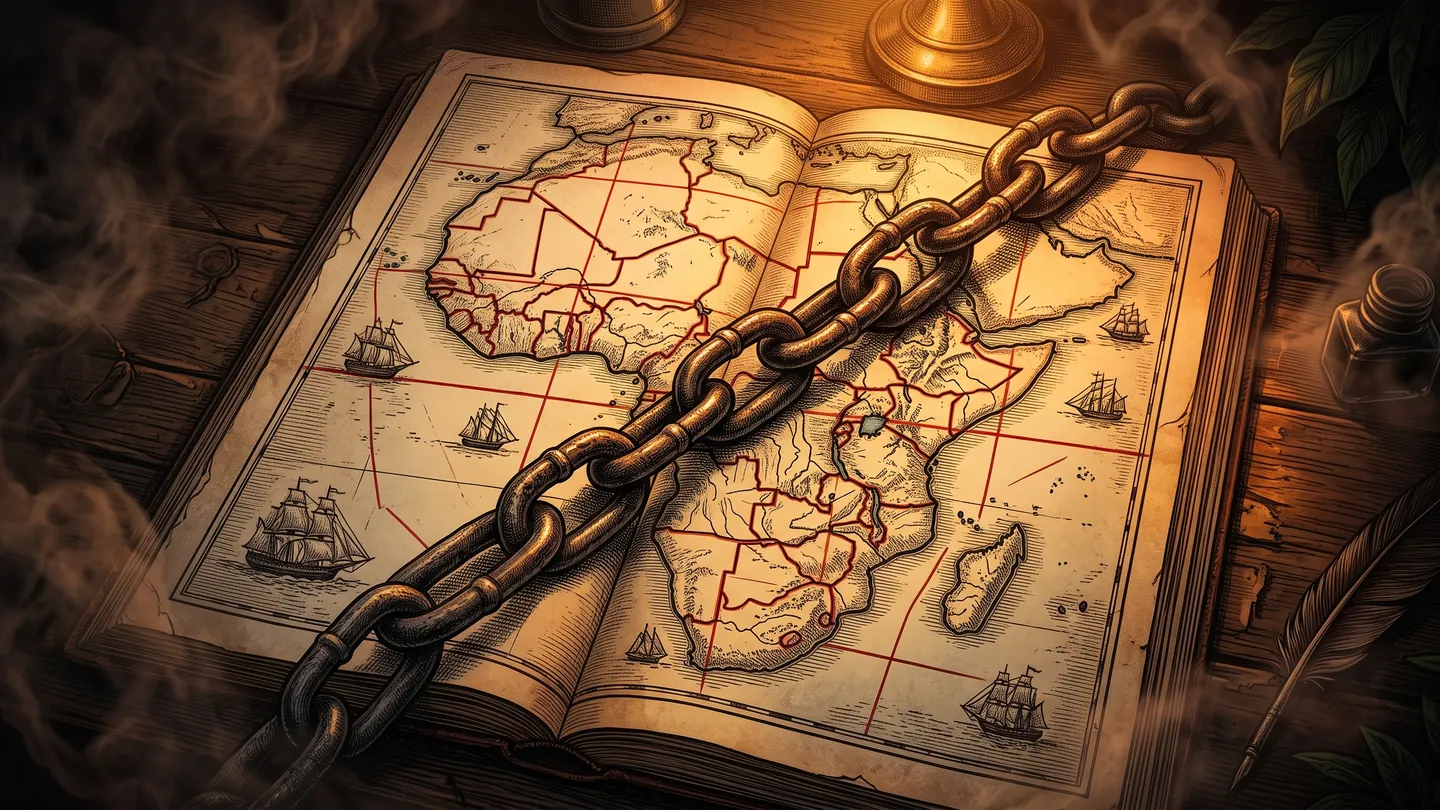
Monetary Colonialism and the Architecture of Extraction
Fiat money is colonialism's most durable technology. The architecture that funds empire also funds the feedlot.
In January 1961, Belgian operatives executed Patrice Lumumba, the first democratically elected Prime Minister of the newly independent Congo. The United States wanted him dead too; the CIA had been ordered to assassinate him and had backed the rivals who hunted him down. He was taken to a remote location in Katanga, shot by firing squad, and his body was dissolved in sulfuric acid. Every physical trace of him was meant to disappear. Almost every trace did. The Belgian police commissioner who carried out that erasure kept a few things for himself. Two teeth. A finger bone. The bullets that killed him. He kept them. Not as a record. Not as evidence. But as trophies.
The logic that drove that commissioner to keep the body parts is the same logic that leads hunters to mount the heads of animals on their walls, to keep antlers above the mantle, to call a severed rabbit's foot lucky. The trophy announces: I have the power to destroy this living thing, and I choose to keep a piece of it as proof of that power. That same logic was applied to Patrice Lumumba. That same logic was applied to those lynched across the American South, whose fingers, toes, and other body parts were taken as keepsakes by the crowds who watched them die. Sometimes the remains were not kept but converted. In the Nazi extermination camps, gold was pulled from the teeth of the murdered, melted into bars, and banked. A human being became a deposit. This is the logic in its purest form. A person is reduced first to a thing, and then to a price.
Those trophies sat in Belgium for six decades. Near the end of his life the commissioner spoke of them openly, even proudly, in a book and on television. He called them his hunting trophies. In 2022, after a long fight by Lumumba's family, the Belgian government returned a single tooth, and Lumumba was finally laid to rest.
What was Lumumba's offense? He wanted the wealth of the Congo to belong to the people of the Congo. Not to any tribe or faction. To the people of the nation. He wanted his country to control its own money, to hold sovereignty over its own ledger. Those who held that ledger understood that holding it was the power.
But examine the word offense. In whose framework was it an offense? Not his people's. The framework that called it an offense was the same framework that said the Belgian colonizers had a right to be there in the first place, a right to the resources, a right to the terms of debt and trade, a right to name the land itself. They wrote the ledger. They decided what counted as a violation. Lumumba did not accept that framework, which is exactly why the US and Belgian governments decided he had to be erased.

Lumumba was not the first. Three years earlier, in 1958, French forces killed Ruben Um Nyobè, the leader of Cameroon's independence movement. Two months before Lumumba's death, in November 1960, French intelligence poisoned the movement's next leading figure, Félix-Roland Moumié, in a Geneva restaurant. Their offense, like Lumumba's, was insisting that independence be real. Lumumba would not be the last.
Sylvanus Olympio, the first president of independent Togo, was assassinated in January 1963 after refusing to join the French monetary zone. He was planning to introduce a Togolese national currency and break his country's financial dependence on Paris. He was killed in a coup. Gnassingbé Eyadéma, a soldier who took part in the killing and boasted at the time that he had fired the shots himself, took power in his place. Eyadéma ruled Togo for thirty-eight years. Throughout those decades, the West praised the importance of democracy in Africa. Eyadéma held elections. One referendum returned a result of 99.9% in his favor. The elections returned him to power again and again, and each one was a performance. Through all of it, Togo stayed in the franc zone, its currency controlled from Paris. That is why Eyadéma was allowed to rule so long. He kept the money where Paris wanted it, and so Paris kept him.
Thomas Sankara changed the name of his country. He inherited a nation called Upper Volta, a colonial name given by the French, derived from the Volta River. In 1984 he renamed it Burkina Faso, combining two indigenous languages into a phrase meaning "land of the upright people." That act was not just symbolism. It was Sankara asserting the right to define his country on its own terms, to reject the colonizer's claim to name even the place itself.
Sankara then refused what international creditors called "colonial debts." Examine the words. In whose ledger were those debts recorded? The French came, extracted resources, imposed their currency, dismantled existing economies, conscripted soldiers, and left behind bureaucratic structures designed to continue the extraction even after formal independence. Then they said, "You owe us." For what? For being colonized? For the infrastructure built to remove national resources more efficiently? The debts were real only inside the colonizer's accounting. Sankara was not refusing legitimate obligations. He was refusing to acknowledge the colonizer's right to write the ledger at all.
For that, he was killed in a coup in October 1987. The man who led it was Blaise Compaoré, Sankara's close friend and comrade, who had stood beside him when they took power together four years earlier. Compaoré ruled for the next twenty-seven years. He kept Burkina Faso in the franc zone, and so France kept its friend in the capital. Decades later, in 2022, a court in Ouagadougou convicted Compaoré in absentia of complicity in the killing.
Muammar Gaddafi built Libya's sovereign wealth fund into one of the largest on the continent and began working toward a gold-backed pan-African currency that would give African nations a monetary system outside Western control. In 2011, NATO bombed Libya. Gaddafi was killed. The fund disappeared. The proposal died with him.
Across decades and across the continent, a pattern emerged. A leader moves to reclaim sovereignty over his nation's money. He is removed by force. In his place, someone cooperative is installed: an Eyadéma, a Compaoré, men who understood the system, worked within it, and kept their nations inside the monetary structure their predecessors had died trying to leave. The colonizers did not simply kill the ones who resisted. They replaced them with managers. The resources kept flowing outward, and control of the ledger stayed in the same hands, centralized and unaccountable to the people whose wealth was extracted through it.
It is worth being direct about why Africa sits at the center of this pattern rather than as one example among many. Africa is home to some of the richest land and the poorest people on the planet. The continent holds an extraordinary share of the world's natural resources. The cobalt in your phone. The uranium powering nuclear reactors. The coltan, the gold, the oil, the arable land. Niger is a case in point. France colonized the territory, drew its borders, and ruled it until 1960. For decades after, the uranium dug out of Niger's ground helped run France's nuclear reactors, while Niger itself remained one of the poorest countries on earth. The Democratic Republic of Congo produces roughly three-quarters of the world's mined cobalt, the metal at the heart of every electric vehicle battery and smartphone. The people of Africa are among the world's most impoverished. Not because the land is poor. Because an architecture of extraction was built specifically to ensure those resources leave the continent for a printed pittance. What wealth returns does not reach the people whose land holds it. It reaches the officials installed to keep the arrangement running. The juxtaposition of maximal resources and minimal prosperity is not a paradox. It is the system working as designed.
That architecture was formalized in 1884 at the Berlin Conference. European powers gathered in Berlin and divided the entire African continent by drawing lines on a map. No African representative was present. They called it civilizing. What they were building was an extraction architecture, continental in scale.
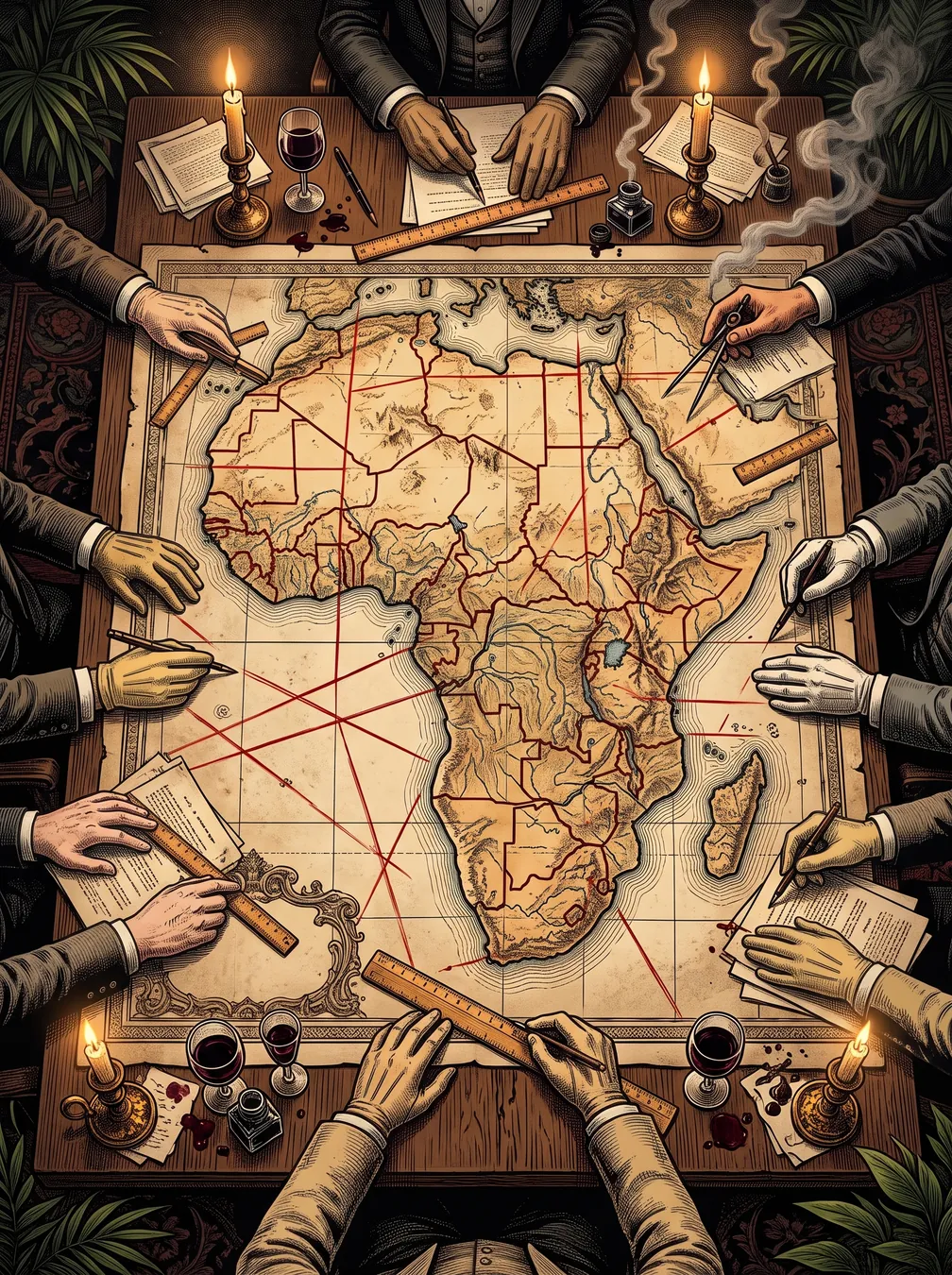
The method was not simply to arrive with guns and claim land. European powers found peoples with existing histories, borders, rivalries, and trade relationships. They armed rival factions against each other. They rewarded collaborators with weapons and political protection. They introduced trade dependencies that hollowed out existing economies. They conscripted soldiers from the colonized populations to fight their own wars. And when the population was sufficiently weakened and fractured, they drew the lines. The Berlin Conference did not divide a unified continent. It formalized an extraction architecture that had been under construction for over a century, with no one from that continent in the room.
Although formal independence arrived across Africa through the mid-twentieth century, almost none of the underlying colonial machinery changed. The flags changed. Some of the faces in power changed. But for most of France's former colonies in West and Central Africa, the money did not change at all. They were kept on the same colonial-era currency, the CFA franc, still pegged to the French franc and still managed from Paris. A few broke away. Guinea left in 1960, Mali for a time, Mauritania and Madagascar in the 1970s. Most did not, and most still have not.
Breaking away was never free, and Guinea showed what it cost. When Sékou Touré led Guinea out of French control in 1958, declaring that his people preferred freedom in poverty to riches in slavery, France set out to deliver the poverty. Administrators withdrew and destroyed what they could not carry, down to the medicines and the lightbulbs. When Guinea printed its own currency in 1960, French intelligence forged it in bulk and flooded the country with the counterfeits to wreck its value. The method was not even original. Less than two decades earlier, Nazi Germany had counterfeited British pound notes by the millions, trying to collapse its enemy's economy from within, and France simply turned the same weapon on a former colony. A nation had walked away from France's money, and so France ruined the money it printed to replace it. Leaving was not permitted quietly. It was punished, and the punishment was monetary.
And the soldiers did not leave either. This was the part the word "independence" was meant to hide. France kept military bases across its former territories, in Senegal, Ivory Coast, Gabon, Chad, Niger, and beyond, and intervened by force more than fifty times in the decades after "independence." The money and the military stayed together, each guarding the other, exactly as they always had. It was the same might-makes-right arrangement under a new name, and the name was the whole trick. None of it was hidden by being subtle. A separate currency run from the old imperial capital, with foreign troops on the ground to back it, could hardly have been more visible. Call it independence, call it partnership, call it stability, and the same setup passed for its opposite. It was not hard to see. It was hard to resist, and hard to name, for the simplest reason. The words for it were never the people's own. Freedom, partnership, independence. The colonizer supplied the language and kept the power to decide what the words meant. The soldiers stayed in the background, and they only came out when someone saw the arrangement for what it was and moved to end it.
Look closely at that currency, starting with its name. When France created the CFA franc in 1945, CFA stood for Colonies françaises d'Afrique, the French Colonies of Africa. After independence the words were softened, first to the French Community of Africa, then to the African Financial Community. The letters never changed. Neither did the arrangement. The CFA franc is used today by fourteen African nations across two monetary unions. Its value is fixed to the euro, and the arrangement is backed and shaped by France. The member nations cannot set their own monetary policy or choose their own inflation rate. For decades they were required to hold half of their foreign reserves in the French Treasury, and France kept a veto over the unions' decisions and a real-time window into their accounts. Reforms have trimmed some of these terms. The core has held: a currency pegged to Europe, guaranteed by Paris, and used by fourteen nations that do not control it. This is not history. It is the operating arrangement of today.
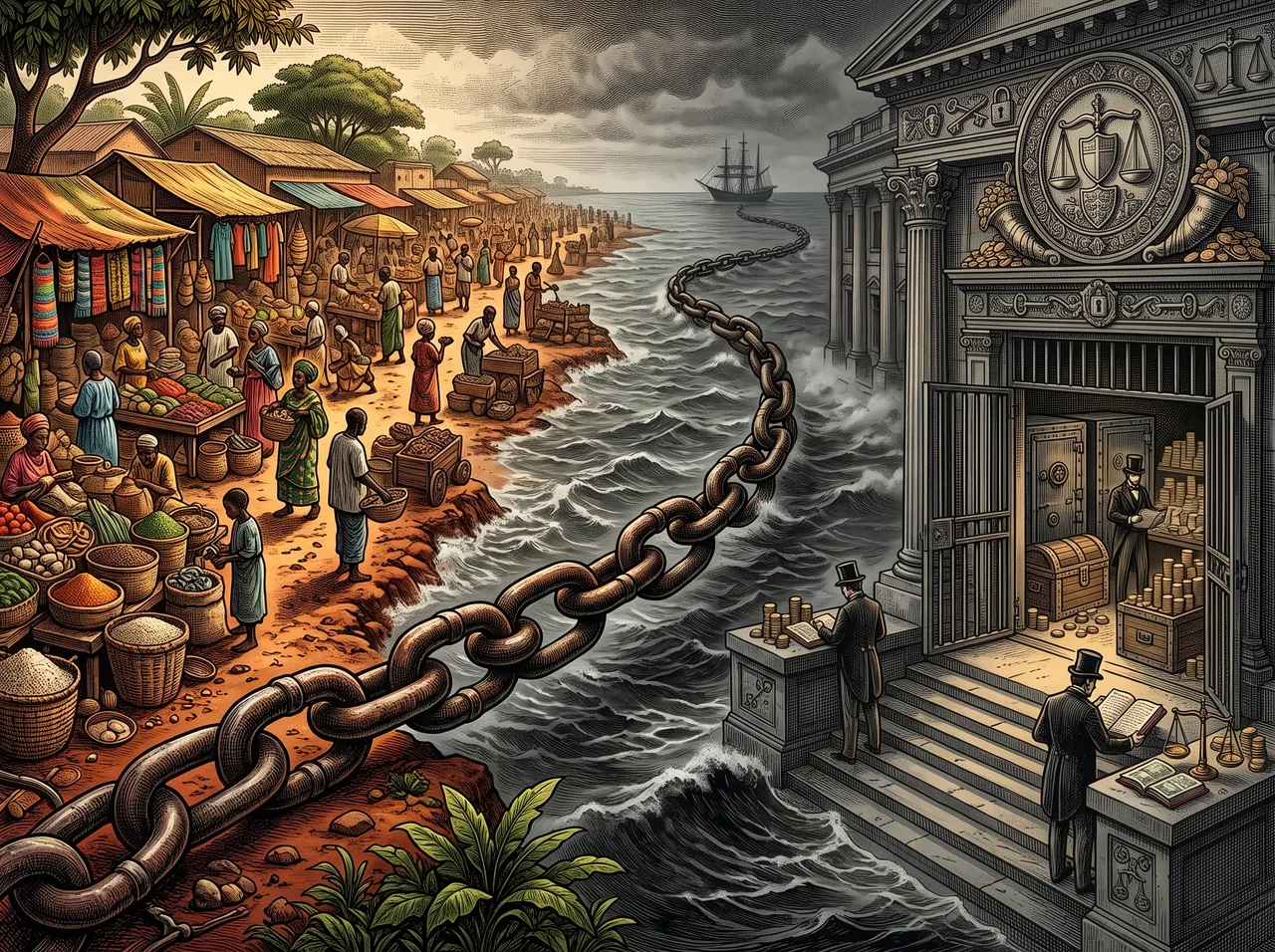
This is why the recent revolts across the Sahel have been treated as an emergency by France. Beginning in 2022, military governments in Mali, Burkina Faso, and Niger forced French troops out, the same troops that had been stationed in the region for sixty years. Mali expelled France's ambassador. Burkina Faso tore up its military accord, and France suspended nearly half a billion euros in aid. When Niger's government fell in 2023 and demanded the soldiers leave, France at first refused to recognize it, refused to withdraw its ambassador, and backed the threat of armed intervention by neighboring states. Within months it reversed course. The ambassador left, and the last French troops were gone by the end of the year.
These nations got the soldiers out. They have not gotten the money out. Mali, Burkina Faso, and Niger still use the CFA franc. The military was the lock they could break by force. The currency is the one they are still inside. That is the measure of which weapon runs deeper.
The pattern was never limited to the CFA franc zone. Nigeria, the most populous nation on the continent, was a British rather than French colony. After independence, the currency issued by Britain's colonial currency board became the Nigerian pound, and on January 1, 1973, it was renamed the naira. A new name on the same arrangement.
Chatham House, located in London, is a policy institute where Western governments and corporate interests converge to shape the narratives and agendas that drive global affairs. Nigerian presidential candidates, in recent election cycles, have made the journey to London to present their platforms at Chatham House before returning home to seek office. That journey tells you where power sits. A candidate's credibility does not come from the people of Nigeria alone. It comes from the Western audiences in London who control the capital, the trade relationships, and the terms of global belonging. The informal message is clear. Your legitimacy comes from here, the same place your money does.
In 1986, under conditions attached to lending from the World Bank, Nigeria adopted a Structural Adjustment Program that devalued the naira sharply, eliminated petroleum subsidies, and removed import and export controls. The immediate impact was brutal. The naira fell from roughly 0.89 to the dollar to 2.02 to the dollar. It kept falling. As of 2026, it takes well over a thousand naira to buy a single dollar. This time it took no assassination. No coup. No warships in the harbor. Only the terms attached to a loan no one had voted on, and a currency the nation was never allowed to fully control.
The wealth extracted from Africa was never just cobalt, gold, and other minerals. It was also people. The same logic that treated a continent's material resources as someone else's property treated its people as property too. More than twelve million Africans were carried across the Atlantic in chains. Some of them were taken to Saint-Domingue, a French colony on a Caribbean island.
There, the system built to own human beings finally produced the one thing it would not survive. In 1804, the enslaved Africans of Saint-Domingue rose up, defeated the army Napoleon Bonaparte had sent to re-chain them, and declared their freedom. Napoleon was the most celebrated military commander in Europe, the man who had reshaped the continent through twenty years of war. The people he meant to keep in chains defeated him. They rejected the French name Saint-Domingue and reclaimed the island's older Indigenous name, Ayiti. Haiti.
It was not freedom in the way the American and French revolutions proclaimed freedom, with slavery left running inside their own borders and the contradiction papered over. It was the real thing. The formerly enslaved wrote the laws. The formerly enslaved were the citizens. The formerly owned now held the land they stood on.
France responded by demanding reparations.
Not reparations to Haiti for the centuries of enslavement, the stolen labor, the beaten bodies, the lives consumed on those plantations. Reparations from Haiti to France. For what? For the loss of property. The property in question was the human beings who had freed themselves.
Those human beings were not property in some neutral legal sense. France had not been a neutral custodian. They had been worked to death, tortured, and killed in industrial quantities. The colony of Saint-Domingue had been among the most brutal plantation systems in human history. France had extracted extraordinary wealth from those bodies for over a century. Now it demanded payment for the interruption of that arrangement.
In 1825, King Charles X sent a fleet of warships to make the demand concrete. Pay, or face economic isolation and the possibility of war. Haiti had just finished one war and could not immediately fight another. The choice was to pay or be strangled. Haiti agreed: 150 million francs, later reduced to 90 million, as the price of French recognition. To make the first payments, Haiti borrowed from French banks. They were paying France with loans from France, at interest, for the privilege of having freed themselves. The final payment was made in 1947. For 122 years, the Haitian state sent money back to the nation that had enslaved it. The wealth that could have built hospitals, roads, and schools was shipped back to France on a schedule France had written.
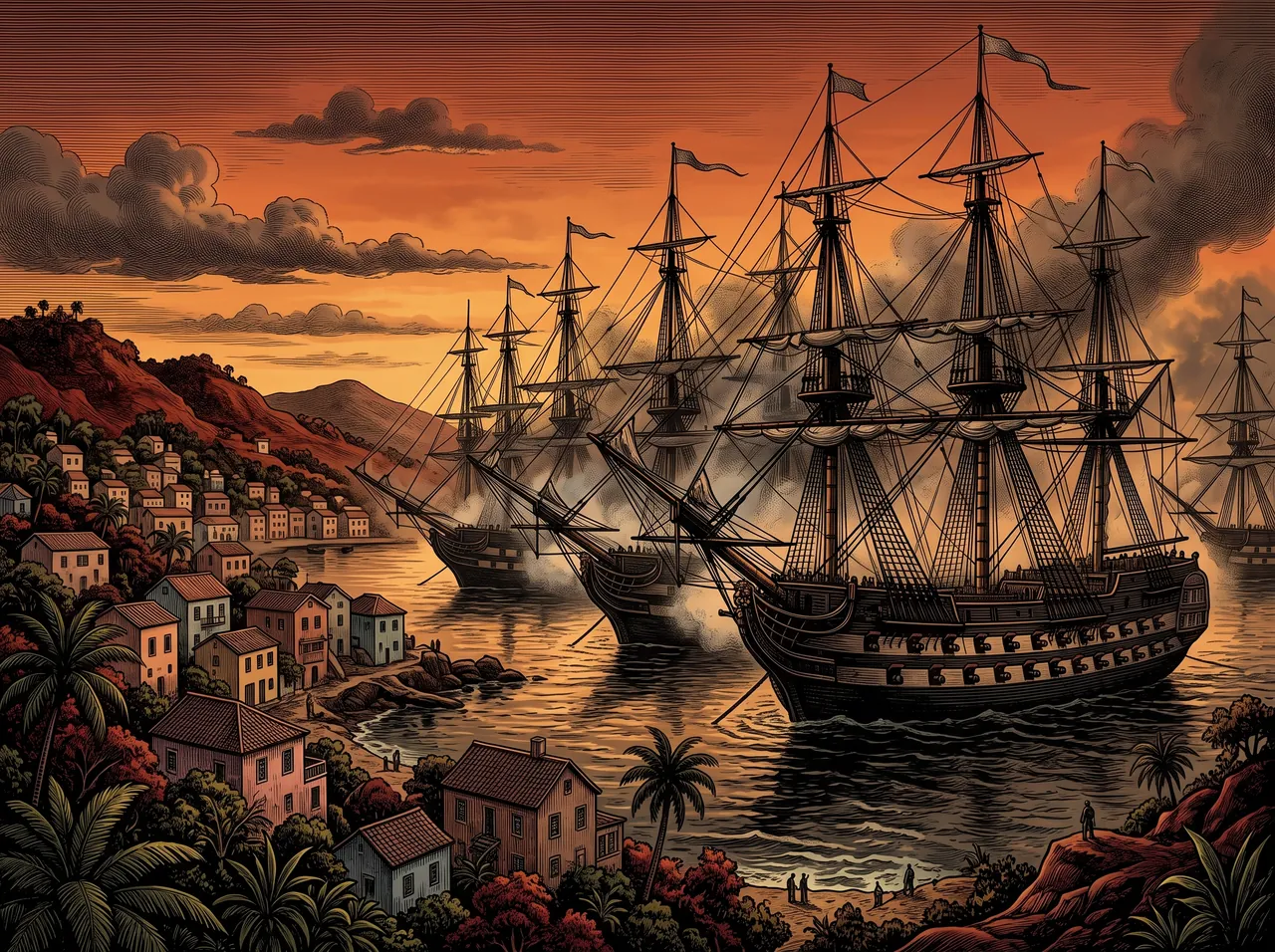
That was not debt. That was extraction dressed in the language of obligation.
This is what monetary colonialism looks like when it has nothing left to hide behind.
There is one more part of this pattern worth tracing to its source. When an extraction system drains the wealth, resources, and economic energy from a place for generations, the people follow. Value moves toward the colonizer's country. Then the people move toward where their value went. They emigrate to the nations where the product of their land and their labor ended up. They arrive speaking the colonizer's language, because they were forced to learn it. They look for work inside the economy built partly from what was removed from their countries.
Their arrival is then treated as an immigration crisis. There is nothing surprising about this. It is the system at work. The flow of people follows the flow of wealth, as it always has. Drain the value from a place, and the people of that place will move toward where the value went. Proportional and opposite. Nearly mathematical. It is a strange thing to drain a people's wealth for generations and then treat the people who follow it as intruders. The arrival is not the intrusion. The extraction was.
The newest form of this control was added on top of the warships and the bases, not in place of them. The global financial system runs on a small number of networks and currencies controlled largely by Western powers, and a nation that defies them can be shut out of it. That nation's banks can be cut from the messaging systems that move money across borders. Its reserves, held abroad, can be frozen. Its access to trade and credit can be closed in an afternoon. No fleet has to sail. The threat sits quietly inside the plumbing of money itself. But the ultimatum is the same one France delivered to Haiti by warship in 1825. Stay inside our terms, or be strangled.
Before Bitcoin, there was no practical exit from the system. A nation that wanted monetary sovereignty and was willing to fight for it still had to buy its weapons in a currency it did not control. A revolutionary army still had to pay its soldiers in the money controlled by the power they were resisting. A family in Dakar held CFA francs. A family in Lagos held naira. Neither was theirs to control. The choice was to hold the currency and hope, or to take up arms and discover that the arms themselves had been purchased through the very system they were fighting against.
That was the trap. There was no door.