There's No Economy Without Ecology
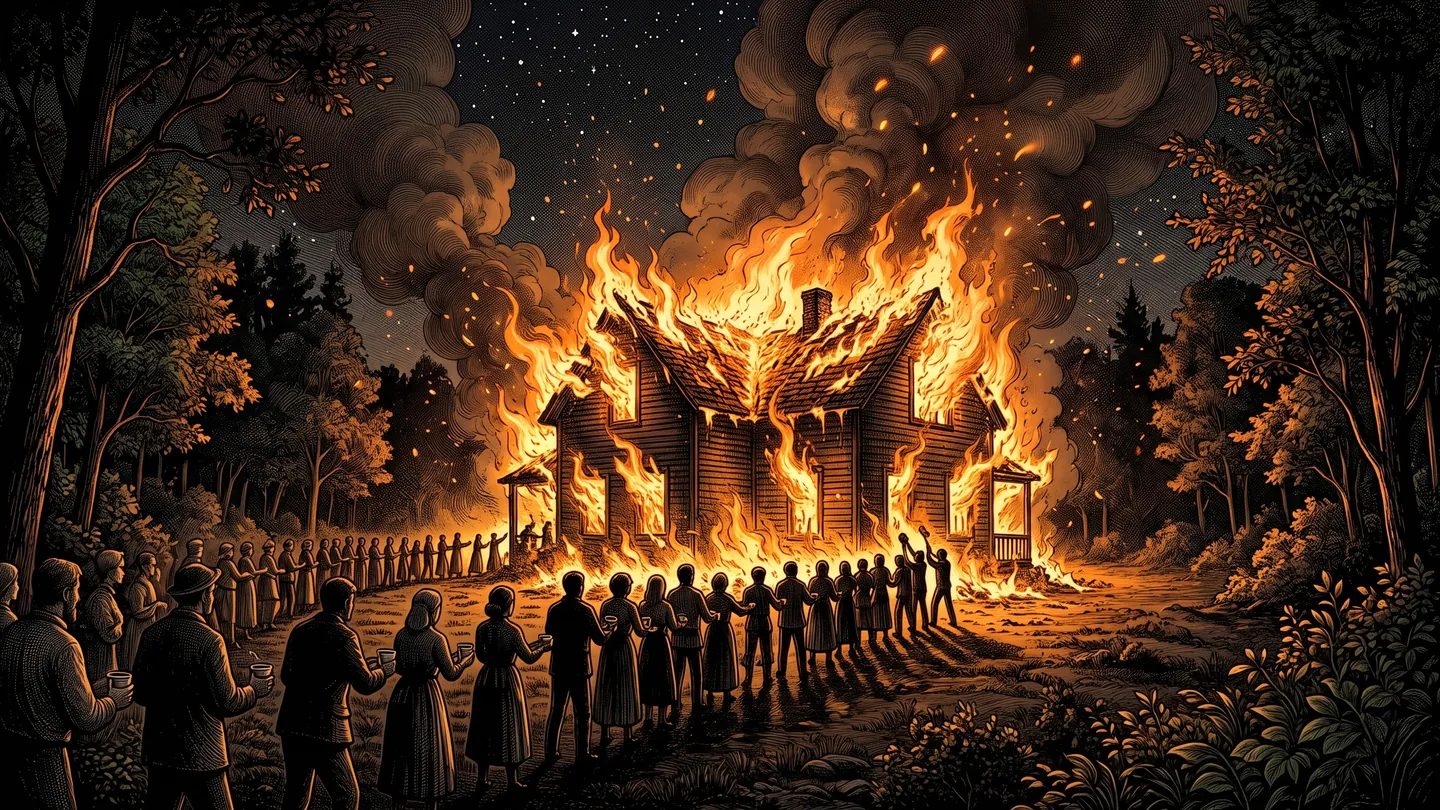
The house is on fire, and the shorter shower is a thimble of water. Beneath every green gesture sits the money.
The scientists who study the planet no longer argue about whether we are in crisis. They argue about how bad it is, and how much time is left. The disasters are bigger. The heat lasts longer. The glaciers are melting. The air and water carry more poison every year. The house we live in is on fire, and the fire is spreading. Yes, Bitcoin's network uses real energy, more electricity in a year than the whole of Switzerland. But the house was burning long before Bitcoin existed, and unplugging it would not put the fire out.
How much does a shorter shower actually help? Look at what we are handed to fight it with. The shorter shower. The energy-efficient bulb. The thermostat turned down a couple of degrees. The carbon credit bought to offset a flight. These represent real efforts, made by people who care, but they are merely thimbles of water being thrown into a house in flames. Every year, the efforts continue, yet the fire grows larger.
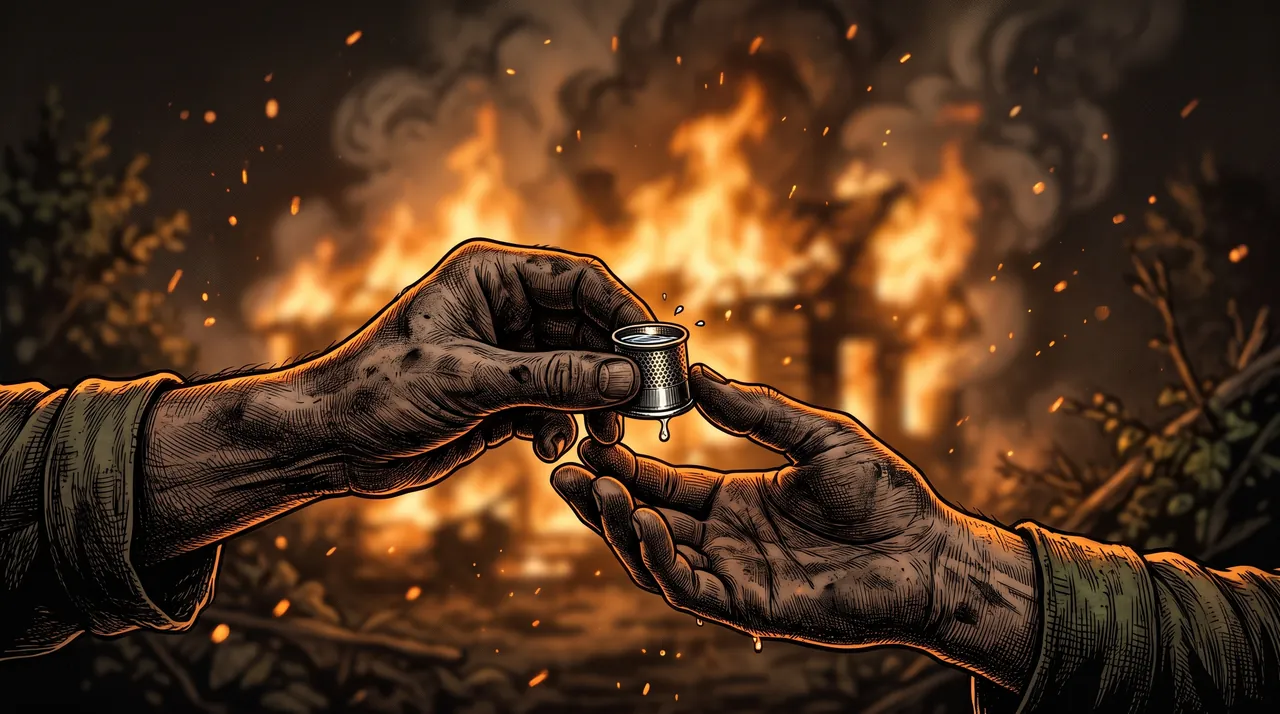
The water never reaches what is feeding the fire. Beneath all these efforts sits the thing that actually decides what gets built and what gets burned: the money.
We are taught to picture the economy as the whole, and the planet as a part inside it. It is the other way around. The economy is something we built, and we built it on a planet that was already here. The planet does not depend on the economy. The economy depends on the planet.
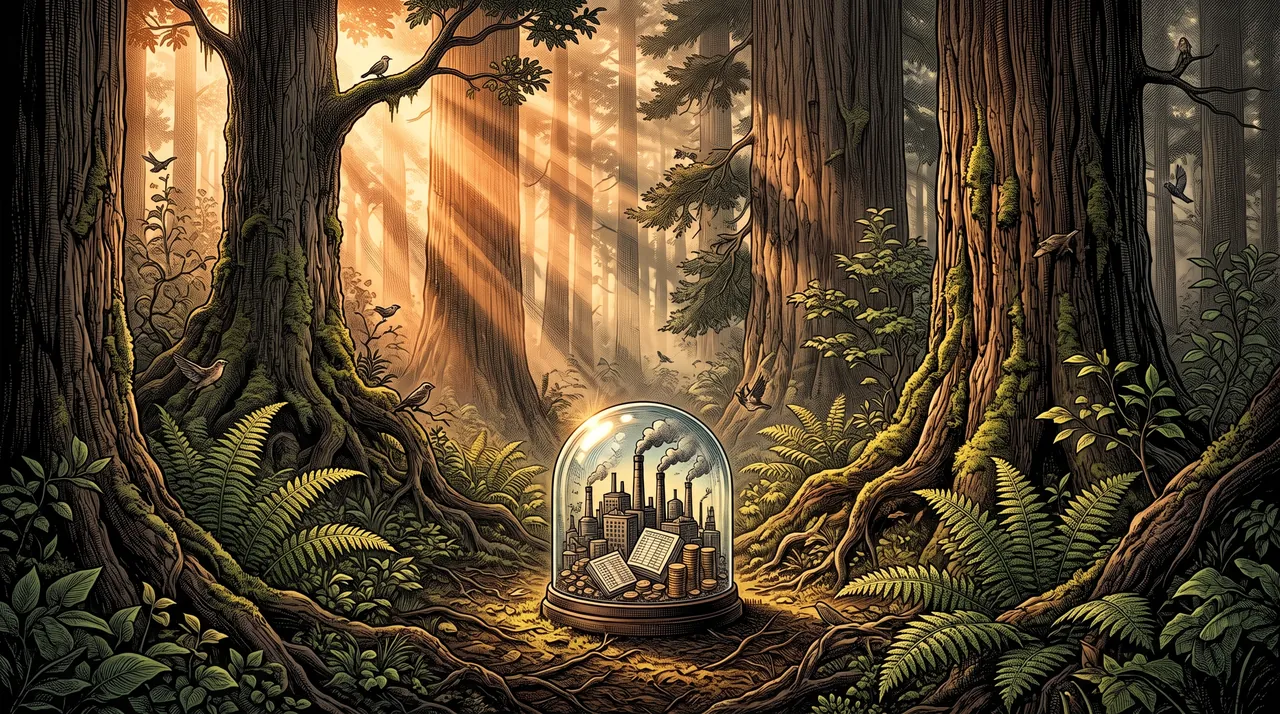
Look at what the market prices, and what it does not. Oil, lumber, flesh: each is measured, sold, and counted as wealth. A stable climate, living soil, a species that will not return: it sets no price on these at all. Economists have a word for a real cost that no price records. They call it an externality, a cost shoved off the books, onto everyone, onto the years not yet born. Yet all the money in the world is worthless in a world you cannot live in.
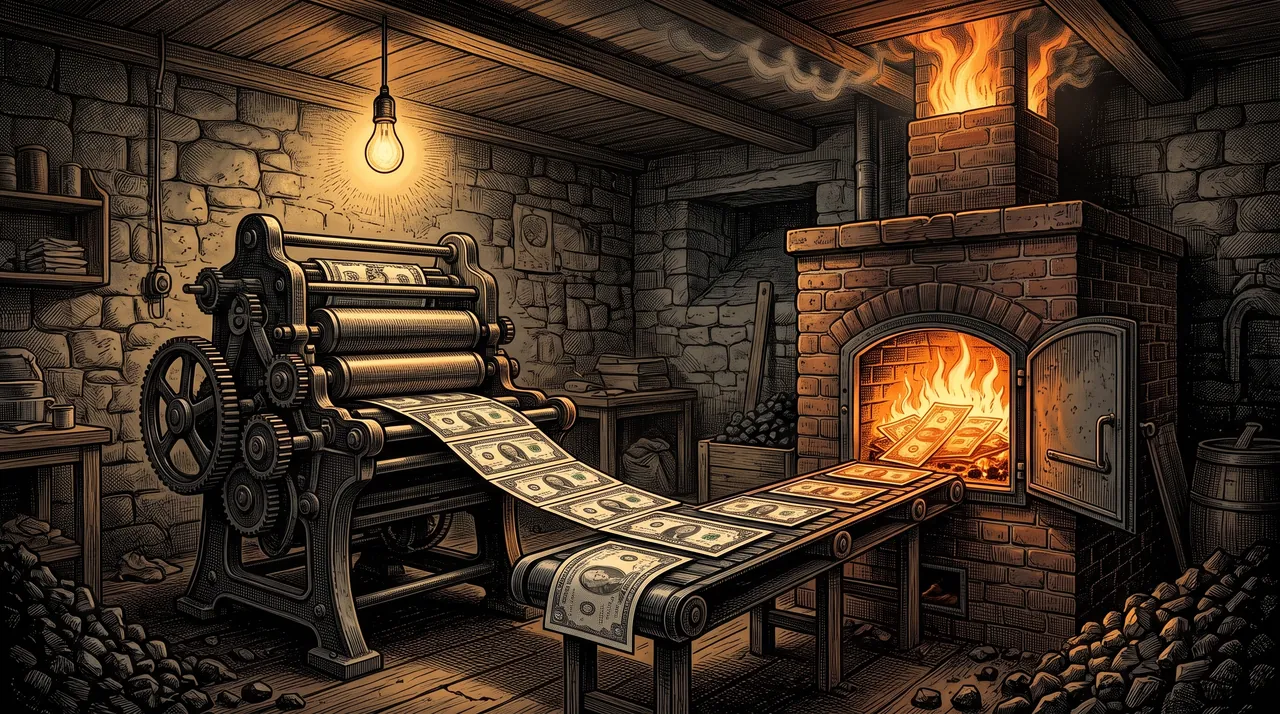
Some point to Bitcoin's energy use, while down in the basement, the money printer never stops paying the people who light the fires. The shorter shower, the bulb, the carbon credit, all play whack-a-mole against fires the printer keeps funding. Stamp one fire out, and three more rise in its place, because we have not shut off the source.
Someone who has already stopped using animals for food will notice a familiar pattern: a system that stays standing because its real costs are kept out of sight, carried by those who never agreed to them.
So the question is not how much energy Bitcoin uses. The question is whether Bitcoin can do what thimble-sized gestures cannot, stamp out the source of the fire. If it can, the energy it requires may be a price worth paying.